What We’re Diving Into in This Post
If you’ve ever felt afraid to speak your truth, hidden your spiritual practices, or apologized for being “too much,” you’re experiencing the witch wound – an ancestral fear of being powerful, visible, and authentic that keeps modern women small. In this post, we will explore what the witch wound really is, how it manifests in everyday life (from workplace dynamics to spiritual communities), and why healing requires both community connection and alignment with natural rhythms like moon phases and seasonal cycles. You’ll learn to recognize witch wound patterns in your own life and discover why reclaiming your power as a witchy woman isn’t just personal healing—it’s essential for collective transformation. Whether you’re new to shadow work or deepening your spiritual practice, this article offers practical insights for midlife women ready to stop shrinking and start living their magic out loud.
When Being “Too Much” Feels Dangerous
Ever catch yourself apologizing before you’ve even said what you actually want to say?
Maybe you’re in a meeting and you preface your brilliant idea with “This might be stupid, but…” Or perhaps you hide your tarot cards when certain family members visit. You might even feel guilty about wanting more – more success, more visibility, more joy – because somewhere deep down, a voice whispers that having too much makes you unsafe.
That voice? It’s not personal insecurity talking. It’s the witch wound – and it’s been passed down through generations of women who learned that being powerful, visible, or “too much” could get them hurt.
The witch wound is the fear of being too powerful, too visible, too much. And if you’ve ever felt like you need to shrink yourself to stay safe, this four-part series is for you. Because here’s the truth: you cannot heal the witch wound in isolation. The wounding happened in community, and the healing must too.
My Wake-Up Call to the Witch Wound
In my early twenties, I worked for a big corporation – the kind where I was often the only woman in the room. I had a bachelor’s degree, high marks, all the “right” credentials. And yet, I watched male colleagues walk into locations and say, “Hey Tom, I’m going to handle this,” and get an immediate “Yeah, no problem.”
When I walked in with the exact same authority and said the exact same thing? “Wait a second. You can’t do that without asking first. What’s a pretty girl like you doing making decisions like that?”
The competence that made my male peers trustworthy made me threatening. And when I tried to schedule meetings with female managers – women who should have been my allies – I got ghosted for months. I finally brought an older female coworker with me, and she knocked on the same door I’d been knocking on. Suddenly, we had a meeting.
This wasn’t about my communication skills or my competence. This was the witch wound in action – showing up in boardrooms instead of town squares, but carrying the same ancient message: women with power are dangerous. Women supporting other women? Even more dangerous.
What the Witch Wound Really Is (And Why It Still Matters)
The witch wound isn’t some mystical curse or abstract concept. It’s the lived, inherited trauma of what happened when women were systematically punished for being wise, powerful, prosperous, or independent.
From roughly 1450 to 1750, witch trials swept through Europe and America. While not everyone accused was a woman (estimates range from 75-90% depending on location), the overwhelming majority were. And the women targeted? They were midwives, healers, property owners, empaths – anyone who held knowledge, independence, or power that threatened the existing order.
In the 1486 text Malleus Maleficarum, written by a Catholic authority, one line captures the fear perfectly: “No one does more harm to the Catholic Church than midwives.”
Why? Because midwives could ease the pain of childbirth – and that pain was supposedly Eve’s punishment for original sin. A woman who could relieve suffering was literally interfering with divine justice. She was too powerful. Too knowledgeable. Too much.
These aren’t just old stories. According to research from Harvard, even today, the more competent a woman appears in the workplace, the less likable she is judged to be. Competent women are seen as threatening. Powerful women are seen as problems.
Sound familiar?
How the Witch Wound Shows Up in Your Life Today
The witch wound isn’t about literal stake-burning anymore. It’s subtler now, but just as damaging. It shows up when you:
Downplay your intuition around certain people. You have a gut feeling, a brilliant idea, or a flash of knowing – and you swallow it down because you don’t want to seem “too woo” or “too much.” You hide your tarot cards. You don’t mention the moon ritual you did last night. You pretend you don’t notice the energy in the room.
Over-explain and over-apologize. “I’m sorry, but…” becomes your default opening line. You explain your decisions three different ways, trying desperately to be understood, validated, heard. You’re terrified of being misunderstood because being misunderstood feels dangerous.
Feel guilty about wanting more. More success, more money, more visibility, more pleasure. You tell yourself you should be grateful for what you have. Having too much prosperity, too much power, too much anything – it feels wrong. Greedy. Unsafe.
Shrink yourself in professional spaces. You don’t speak up in meetings. You let less-qualified people get promoted over you. You make yourself small and convenient because taking up space feels like painting a target on your back.
Elbow other women for the little space available. Instead of lifting each other up, we compete for the tiny table scraps of power and recognition we’re allowed. We become crabs in a bucket because there’s not enough room for all of us – or so we’ve been taught.
If any of this resonates, you’re not broken. You’re not weak. You’re carrying the witch wound – and it’s time to start healing it.
The School Wound, The Sister Wound, and Modern Witch Trials
The witch wound doesn’t just live in workplaces. It’s in our families, our friendships, and our spiritual communities.
Think about school – how girls learn early to shrink. To be the “good girl.” To not be too loud, too smart, too ambitious. We learn that being “too much” gets us socially punished.
Think about female friendships – how we’ve been taught there’s only room for one woman at the top. That another woman’s success somehow diminishes ours. That we have to compete instead of collaborate.
And think about spiritual spaces – how even in witchy, intuitive, goddess-worshipping circles, we sometimes tear each other down. Judge each other’s practices. Police who’s “witchy enough” or doing it “right.”
Recently, a public figure even remarked dismissively about “Norse pagan people,” associating spiritual practice with something negative and other. The message was clear: don’t be too visible with your beliefs. Don’t take up space with your magic.
This is the witch wound working exactly as designed – keeping us small, separate, and silent.
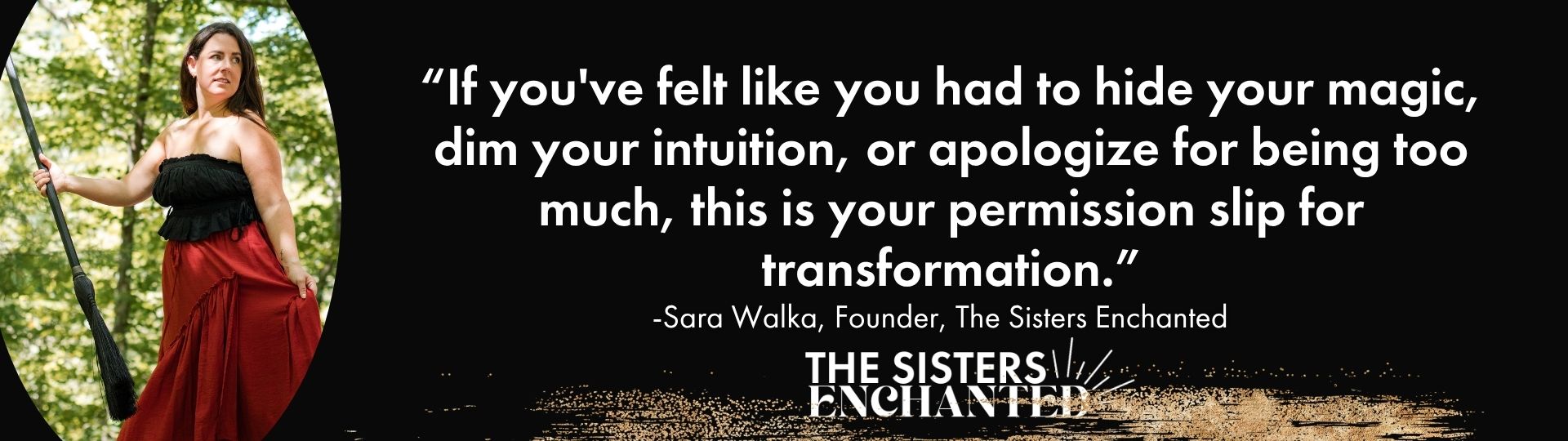
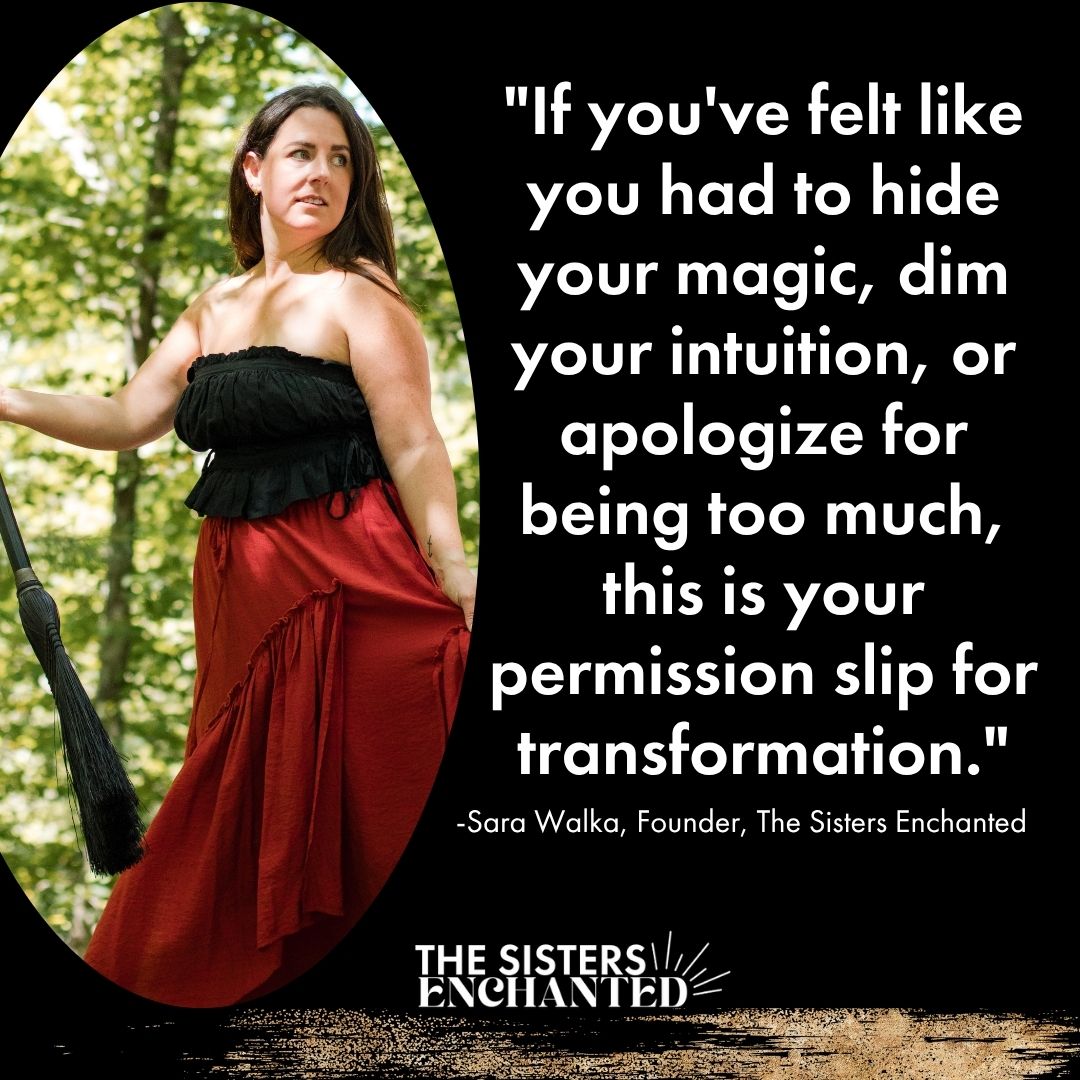
“If you’ve felt like you had to hide your magic, dim your intuition, or apologize for being too much, this is your permission slip for transformation.” – Sara Walka
Why You Cannot Heal This Alone
Here’s what I need you to understand: the witch wound happened in community, and it can only heal in community.
Women sat by and watched while other women were accused, tried, and sometimes executed for witchcraft. They stayed silent out of fear – fear they’d be next.
Women sit by today and watch other women get harassed, passed over, dismissed, and diminished. We stay silent because we know speaking up makes us the problem.
But healing happens when we refuse to stay silent. When we gather. When we witness each other’s magic and say, “You’re not too much. You’re not crazy. I see you, and you belong here.”
Isolation is how the wound deepens. Belonging is how it heals.
The Path Forward: Rhythm, Community, and Reclamation
So how do we actually heal the witch wound? We start by coming back to our natural rhythms.
The seasonal wheel, the lunar cycle, the ebb and flow of nature herself – these rhythms help regulate our nervous systems. They pull us out of the chaos of constant productivity and into presence. They remind us we are nature incarnate. We are the universe in human form.
When we sync with these rhythms in community – gathering at new moons and full moons, celebrating sabbats and seasons, witnessing each other’s growth and release – we rebuild a collective nervous system. One that can hold the truth of our power without collapsing.
We create the energetic capacity to stand in the fire when someone tries to burn us at the metaphorical stake. Because this time? We’re not standing alone.
Your Witch Wound Healing Begins Now
The witch wound is not your fault. It’s not my fault. It’s an ancestral inheritance, a societal pattern, a collective trauma.
But healing it? That’s in our hands.
You are not too much. You are not too powerful. You are not too visible. You are magic itself – and the world needs you to stop apologizing for it.
In the coming weeks, we’ll dive deeper into how isolation keeps the wound festering, why belonging is medicine, and how the rhythms of nature can support your healing. But for now, I want you to ask yourself:
-
Where am I downplaying my intuition?
-
Where am I hiding my magic?
-
Where am I apologizing for taking up space?
And then ask the most important question: What would it feel like to stop?
Ready to heal the witch wound in community? Join us in the Enchanted Journey membership, where we gather for moon rituals, seasonal celebrations, and the kind of soul-deep belonging that makes transformation possible. You don’t have to do this alone anymore.
Stay magic, Enchanted Sister. Your bigness is not a problem – it’s your birthright.
Common Questions About Witch Wound Healing
What exactly is the witch wound? The witch wound is the ancestral fear of being too powerful, visible, or authentic that stems from centuries of women being punished for their wisdom, intuition, and independence. It shows up today when you hide your spiritual practices, downplay your intuition, apologize for taking up space, or feel guilty about wanting more in life.
How do I know if I have the witch wound? Signs include hiding your tarot cards or spiritual beliefs from others, over-explaining your decisions, feeling unsafe being visible or successful, shrinking yourself in professional spaces, and competing with other women instead of collaborating. If you’ve ever felt “too much” or been told you’re “too much,” you’re experiencing the witch wound.
Can I heal the witch wound by myself? No – and that’s actually important. The witch wound was created in community (through societal oppression and women being isolated from each other), so healing requires community connection. Finding belonging with other witchy women who celebrate rather than judge your power is essential for witch wound healing.
What are practical steps for healing the witch wound? Start by syncing with natural rhythms like moon phases and seasonal cycles to regulate your nervous system. Join a community of like-minded spiritual women where you can practice being visible safely. Work with shadow work practices to identify where you’re dimming your light. Most importantly, stop apologizing for your magic and start speaking your truth—even when it feels uncomfortable.
Does the witch wound only affect women interested in witchcraft? While the term “witch wound” comes from historical witch trials, it affects all women (and feminine-identified people) who’ve learned to make themselves small, hide their power, or fear being “too much.” Whether you practice witchcraft, follow moon rituals, or simply feel called to reclaim your authentic self, the witch wound likely influences how you show up in the world.
How long does it take to heal the witch wound? Witch wound healing is an ongoing journey of transformation, not a one-time fix. As you deepen your self-trust, connect with supportive community, and align with natural rhythms through practices like intention setting and seasonal living, you’ll notice shifts. Many midlife women find that consistent practice with moon rituals and community gathering creates significant change within months—but the work of reclaiming your power is lifelong and sacred.