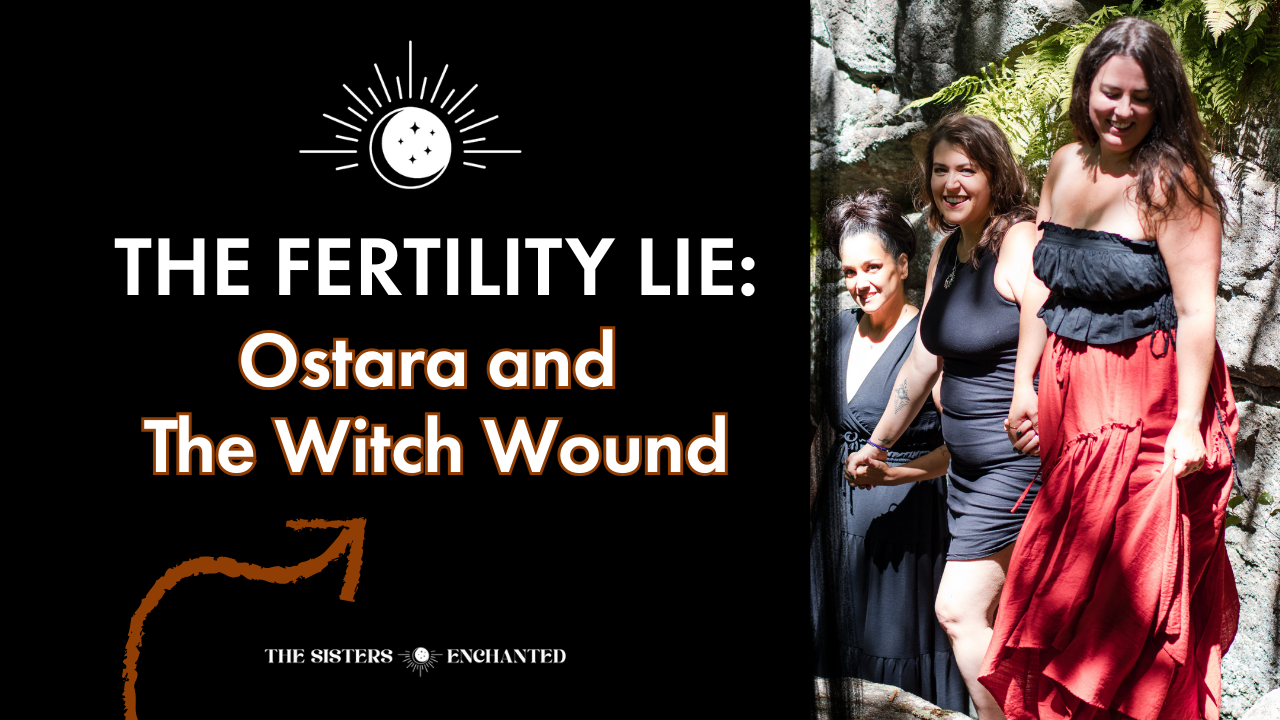
“Your life force is a fertile energy. And it does not expire.”
TLDR: What You Need to Know
- Ostara, the spring equinox, is a festival of fertility — but for many women that word carries more shame than celebration.
- The Witch Wound shows up at Ostara as pressure to produce, perform, and prove your worth through what you create or have not created.
- Fertility is not biology. It is the creative energy available to every woman at every age through tending, wisdom-keeping, mentorship, and presence.
- No woman ages out of creation. Your life force is a fertile energy, and it does not expire.
- A Sisters Enchanted approach to Ostara means reclaiming fertility as a personal creative force — not a societal checkbox.
Definition: What Is Ostara?
Ostara is a pagan sabbat celebrated at the spring equinox, typically around March 20-21 in the Northern Hemisphere. It is one of eight sabbats on the Wheel of the Year and marks the moment when day and night reach equal length and light begins to overtake darkness. Named for the Germanic goddess of spring, Ostara is traditionally associated with fertility, new beginnings, and the reawakening of the earth after winter. Its symbols — eggs, rabbits, seeds, and spring flowers — reflect themes of potential, growth, and renewal.
Definition: What Is the Witch Wound?
The Witch Wound is the ancestral and cultural conditioning that teaches women to fear being too powerful, too visible, or too much. At Sisters Enchanted, Sara describes it as an active, modern pattern — not a historical relic — that shows up in everyday life as hiding spiritual practices, tying self-worth to productivity, silencing intuition, people-pleasing, and believing that what you have not yet produced determines your value. The Witch Wound is not about past lives or burning times. It is about last Tuesday.
Why Ostara Hits Different When You Have the Witch Wound
Spring arrives with its full, cheerful toolkit of imagery — eggs, rabbits, new blooms, pastel everything. For a lot of women, it also arrives with a quiet, familiar pressure that is harder to name.
You should have bloomed by now. You should have broken ground by now. Everybody else is moving forward and you are stuck.
That pressure has a name. It is the Witch Wound showing up at one of the year’s most fertility-forward celebrations. And it is worth looking at directly.
At Sisters Enchanted, Sara has been working with midlife women at the intersection of practical magic and real life for nearly ten years. Ostara can generate complicated feelings — specifically around the word fertility and what it does or does not mean for women in the second half of life.
This post unpacks that tension and offers a different framework for thinking about what it means to be fertile, creative, and fully alive in every season of your life.
Why Does the Word ‘Fertility’ Carry So Much Weight for Women?
Fertility is not a neutral word. It arrives packaged with cultural meaning about what women should want, should have done, should have built, and should look like at different stages of life.
Society ties a significant portion of women’s perceived value to their ability to produce — whether that means biological children, career accomplishments, creative output, or visible results in any domain. The spring season amplifies this. Ostara’s symbols of eggs and new growth are beautiful, but they arrive alongside an unspoken question: what are you growing?
The Witch Wound intensifies this pressure. It whispers the comparison. It tells you that other women have figured it out. It turns creative energy into proof of worth — and absence of results into evidence of failure.
The result is that a celebration of new growth becomes, for many women, an uncomfortable audit of what they have not yet produced.
Why ‘Just Work Harder’ Is the Wrong Answer to Fertility
There is a version of spiritual and productivity culture that responds to struggles with fertility — creative, professional, biological, or otherwise — with a variation of the same message:
If you want it badly enough, you can make it happen. If you focus enough, work hard enough, think positive enough, it will come.
This is well-intentioned. It is also incomplete, and for many women, actively harmful.
The truth is that not everyone is working from the same starting material. Behind every ‘beat the odds’ story, there is something in the soil — prior advantages, timing, resources, relationships, circumstances that made the growth possible. We do not all have the same compost. Our ability to grow and bloom things is not the same, and pretending otherwise does not close that gap. It just adds shame to it.
The Witch Wound feeds on that shame. It takes the gap between what you wanted to produce and what actually grew, and it makes that gap mean something about your worth. A Sisters Enchanted approach to this work says: the gap is not evidence of failure. It is evidence that you are human, in a real season, with a real life.
What Does Fertility Actually Mean? A Broader Definition
Fertility is not limited to biology or to producing something new. At its core, fertility is creative energy — the capacity to generate, tend, nurture, and bring something into fuller expression. This energy is available to every woman, at every age, regardless of what her body is or is not doing.
When we think about a garden, we recognize that fertility is not just about planting new seeds. It is about the whole ecosystem: the quality of the soil, the tending of what already grows, the composting of what has ended so that something else can begin. The same is true for every area of human life.
Fertility shows up in:
- Art, music, writing, cooking — any creative act
- Innovative ideas at work or in your community
- Nurturing relationships and tending to the people you love
- Mentorship and wisdom-sharing with younger people in your life
- Being present in moments, which adds energy to whatever you are part of
- Tending what already exists and helping it grow stronger
Not everything has to be a new birth. Some of the most fertile work a woman can do is to take the wisdom she has already earned and add it to a situation that needs it. That is compost. That is contribution. That is deeply fertile energy.
Do Women Age Out of Fertility? The Midlife Question
No. Not by the Sisters Enchanted definition of the word.
This is one of the most important reframes of Ostara for women in the second half of life. The dominant cultural story about midlife women and fertility is that something ends. The body changes. The window closes. The spring energy feels like it belongs to younger women.
The Witch Wound amplifies this story. It pressures women to stay relevant by performing youth — by showing they are still producing, still generating, still visibly growing something new. The fear underneath that performance is: if I am not actively creating something new, I am no longer fertile. If I am no longer fertile, I am no longer valuable.
This is the story worth challenging.
Your life force is a fertile energy. When you are living in your purpose — showing up fully, sharing your wisdom, being present, tending what exists, mentoring what is emerging — you are contributing to the fertility of the world around you. That does not expire. That does not have a biological clock.
Sara, approaching ten years of building Sisters Enchanted, named this directly in a recent episode: rather than asking what new thing she could birth from the brand, she is asking how to take the compost she has earned and add it to the garden bed of what already exists. That is wisdom-keeping as creative act. That is fertile energy in motion.
How Presence Itself Is a Fertile Act
One of the most undervalued pieces of this conversation is the role of presence in fertility.
When you are actually in a moment — paying attention, showing up fully, not doom scrolling through your own life — you add energy to that moment. You contribute to it. That is a form of creation that requires nothing new to be built. It requires only that you be there.
Distraction is the opposite. When you move through moments without being in them, you pull energy out of the exchange rather than adding it. The fertility drains.
Presence is available right now, in your actual life, regardless of what season your body is in or what you have or have not accomplished. It is one of the most accessible and underused fertile energies available to women — and one of the first things the Witch Wound disrupts.
Expert Insight: Nearly Ten Years of Watching Women and Fertility
Sara, founder of Sisters Enchanted, has been working with midlife women in the intersection of practical magic and real life since 2016. After nearly a decade of watching women navigate the Witch Wound, she notes that Ostara consistently triggers some of the most intense version of the ‘I should have done more by now’ spiral — precisely because spring’s cultural imagery makes comparison so visible. The work at Sisters Enchanted is not to bypass that feeling, but to name it, trace it back to the wound, and reclaim a broader definition of fertility that belongs to every woman at every stage.
What most people miss about the Witch Wound and fertility: the problem is not that women are not creative enough. The problem is that the culture has defined fertility so narrowly — so biologically, so youth-centered, so production-focused — that most of what women actually generate every day does not count. Redefining the terms is the first act of healing.
A Different Way to Work with Ostara Energy
Instead of using Ostara to audit what you have not yet created, consider asking:
- What is already growing in my life that deserves tending right now?
- Where can I add my wisdom or presence to something that already exists?
- What compost have I earned through experience that I can contribute to the people around me?
- What does ‘being fertile’ mean to me personally — separate from what I was taught it should mean?
- Where in my life is my life force energy most alive?
Ostara is a threshold. It is not a performance review. The spring equinox does not ask what you have built. It asks what you are willing to begin tending — even if the seed is something small, something quiet, something that grows underground before it ever shows above the soil.
Frequently Asked Questions
What is the Witch Wound and how does it connect to Ostara?
The Witch Wound is the cultural and ancestral conditioning that teaches women to tie their worth to their productivity, hide their gifts, and fear being too visible or too much. At Ostara, when spring imagery makes fertility a dominant cultural theme, the Witch Wound often surfaces as a comparison spiral — a feeling that you should have accomplished more, created more, or produced more by now. Recognizing the Witch Wound at Ostara means naming that pressure as a pattern rather than a personal failing.
Does fertility have a spiritual meaning beyond biology?
Yes. In earth-based spiritual practice, fertility refers to creative life force energy — the capacity to generate, tend, nurture, and support growth in any area of life. This includes creative projects, relationships, work, mentorship, and the quality of presence you bring to your daily moments. This definition of fertility does not expire with age and is not dependent on biological function.
What is Ostara and when does it occur?
Ostara is a pagan sabbat celebrated at the spring equinox, typically around March 20-21 in the Northern Hemisphere. It is one of eight sabbats on the Wheel of the Year and marks the point when day and night are of equal length, after which daylight increases. Ostara is associated with themes of fertility, new beginnings, renewal, and the return of growth after winter.
How can midlife women connect with Ostara energy?
Midlife women can connect with Ostara by expanding their definition of fertility beyond biology and production. Rather than focusing on what to create new, this season invites an exploration of what wisdom can be added to existing situations, what relationships can be tended more fully, and what creative energy is already alive and ready to grow. Tending, mentoring, wisdom-keeping, and presence are all fertile acts — and all available regardless of age or life stage.
What is toxic positivity’s role in the Witch Wound?
Toxic positivity — the belief that wanting something badly enough or working hard enough guarantees results — feeds the Witch Wound by removing systemic and circumstantial factors from the equation. When a woman cannot produce the outcome she wanted, this framework tells her the failure is personal: she did not want it enough, work hard enough, or believe enough. The Witch Wound uses that message to tie self-worth to outcomes outside of anyone’s full control. A more honest framework acknowledges that we do not all grow from the same soil.
How does Sisters Enchanted approach the Witch Wound?
Sisters Enchanted, founded by Sara in 2016, approaches the Witch Wound as an active, modern pattern — not a historical artifact. The work centers on naming the specific ways the wound shows up in contemporary women’s lives: productivity pressure, comparison spirals, hiding spiritual practices, outsourcing self-trust, and tying worth to visible output. The approach is practical, grounded, and direct — magic as intentional action, not passive positivity.
What Feels Fertile for You Right Now?
That is the question worth sitting with this Ostara.
Not what you should have built. Not what other women appear to be creating. Not what your body has or has not done. But what is alive in you right now — where your energy wants to go, what you want to tend, what wisdom you have earned that is ready to be added to the garden.
Fertility does not begin or end with spring. It lives in your life force. And your life force does not have an expiration date.
If this resonates with you, explore more at The Sisters Enchanted — where practical magic and the Witch Wound have been our work since 2016.