Discover why the witch wound can’t be healed alone. Learn how belonging vs. fitting in transforms spiritual awakening for modern witchy women ready to reclaim their power.
What You’ll Learn in This Post
The witch wound – that ancestral fear of being too visible, too powerful, or too much – wasn’t created in isolation, which means it can’t be healed there either. In this post, you’ll discover why spiritual awakening and personal transformation require community, not just solo shadow work. We’ll explore the difference between fitting in (which deepens the wound) and belonging (which heals it), examine how the witch wound shows up in modern life for midlife women, and learn practical steps to reclaim your power through sacred witnessing and celebration. If you’ve ever felt afraid to be fully seen, struggled with people-pleasing in spiritual spaces, or wondered why you feel lonely even in rooms full of people, this post will help you understand the witch wound’s role – and how to finally heal it.
Why Being Seen Feels So Scary (And Why We Keep Hiding Anyway)
Ever felt afraid to post in an online group you actually paid to join? Found yourself leaving a party early because you felt too visible, too much, too seen?
Maybe you’ve caught yourself downplaying your spiritual practice around friends. Or apologizing for taking up space. Or suddenly feeling like an outsider in a room full of people who should totally get you.
That’s not social anxiety talking – that’s the witch wound.
And here’s what makes it so insidious: the witch wound was created in community, which means it can only be healed in community. Not in isolation. Not alone in your journal at 2am (though that helps). Not by finally getting your meditation practice perfect.
The healing happens when we stop trying to fit in and start allowing ourselves to belong.
Let me explain.
When History Teaches Women to Turn Against Each Other
The witch trials of the 1400s through 1700s didn’t just happen to women – they happened between women. Neighbors accused neighbors. Midwives testified against midwives. Women turned each other in because there wasn’t enough safety to go around, and pointing the finger at someone else meant you were probably safe.
Salt was poured into the witch wound by women. This didn’t happen in isolation.
Now, before we go any further: yes, men were impacted too (about 15-25% of those executed). And yes, the numbers vary wildly by region – 90% women in Western Europe, but closer to 50/50 in some parts of Northern Europe. I’m not here to skew facts for an agenda. This is a societal wound that runs deep.
But here’s what followed us into modern life: that bone-deep fear of being powerful, prosperous, independent, or wise as a woman. The terror of being too visible. The instinct to make ourselves smaller, quieter, more convenient.
And the tendency to isolate when we feel like we don’t fit in.
The Lonely Mom Group and the Witch Wound in Action
When my kids were babies and toddlers, I joined all the groups. Library music time. Breastfeeding support. The whole suburban mom experience.
I was smiling. Having conversations. Being friendly. But I felt profoundly lonely in those rooms.
Because I wasn’t being my authentic self. I was performing “normal mom who has it together” while hiding the parts of me that read tarot cards, tracked moon phases, and felt like I was made of something more magical than grocery lists and diaper changes.
I was trying to fit in instead of allowing myself to belong.
And that’s the witch wound doing its work – convincing us that being seen fully is dangerous, so we self-exclude before anyone else can reject us.
Fast forward to now: my grandfather has dementia. I’m working full-time, homeschooling my kids, managing power of attorney for my grandparents, running a business, and showing up for a community of thousands of spiritual women. When I talk to friends, I can feel that gap – they don’t understand my life, and I don’t fully understand theirs anymore.
The witch wound whispers: You don’t fit here. They don’t get you. You’re too much. You’re alone.
But that’s the trap. Because the moment I start thinking “my experience is more valid than yours” or “we can’t relate to each other,” I’m widening that wound – for me and for them.
Fitting In vs. Belonging: The Difference That Changes Everything
Here’s what I need you to understand: fitting in and belonging are two completely different things.
Fitting in means:
- Editing yourself to match the group
- Hiding the parts that feel too different
- Performing a version of yourself that feels safe
- Avoiding conflict or tension at all costs
- Creating “friendly relationships” that never go deep
Belonging means:
- Being fully seen as you are
- Celebrated for your wholeness, not your sameness
- Taking up space without apologizing
- Allowing tension, depth, and realness
- Building connections that honor difference
Stanford University tracked 86 professional women over two years and found something fascinating: these women actively sought to reduce interpersonal conflict while increasing opportunities for friendly relationships.
The researchers called this intentional invisibility.
Sound familiar?
We make friends. We’re social. We smile and nod and show up. But we don’t reveal the parts of us that might create tension – our spiritual practices, our big ambitions, our unconventional beliefs, our power.
We stay in the shallow end because we’re terrified of the deep.
Where the Witch Wound Shows Up in Modern Life
Self-Exclusion in Spiritual Spaces
I see this constantly in our Enchanted Journey membership. Women join a community of other witchy, spiritual women – literally their people – and then leave because they feel self-conscious about how much they post or share.
No one is judging them. No one is saying they’re too much. But the witch wound has them convinced that visibility equals danger.
The Fear of Taking Up Space
One woman celebrates landing a $200K executive role but won’t share it in the group because she knows other members are struggling financially. Another holds back her tarot insights because she’s worried someone will think she’s showing off.
We silence our wins, our wisdom, and our magic because we’re trying to fit in – not realizing that our full expression is exactly what gives others permission to be full too.
The “I Don’t Fit Anywhere” Loop
Here’s the pattern:
- You join a group or community
- You notice differences between you and others
- You tell yourself: “They don’t get me”
- You pull back, stay quiet, or leave
- You feel more alone than before
- The witch wound deepens
The truth? You were never supposed to fit in. You were supposed to belong. And belonging doesn’t require sameness – it requires presence.
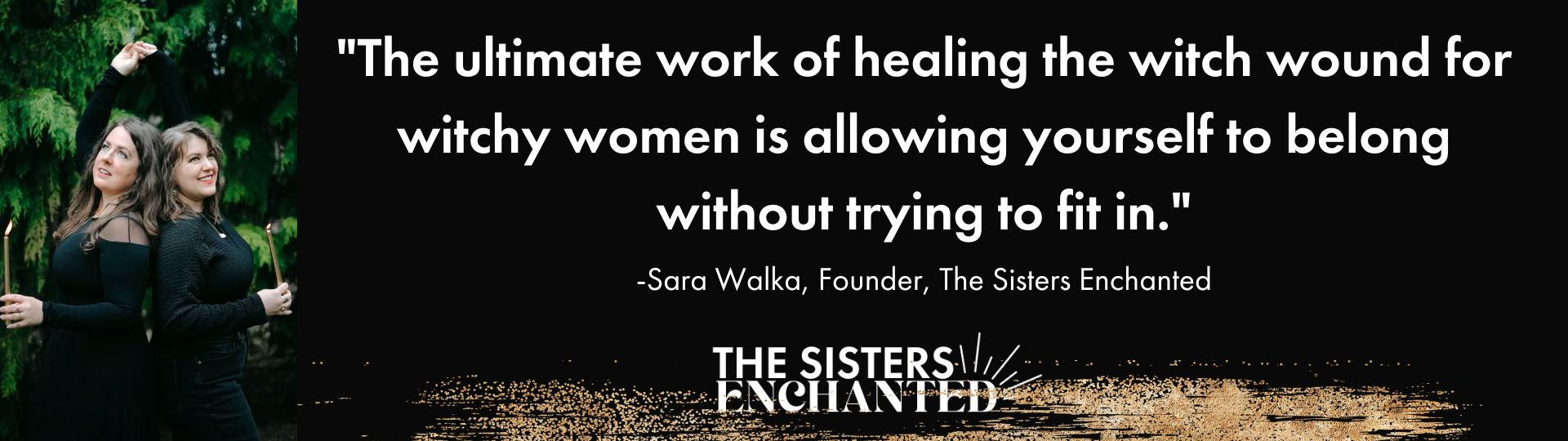
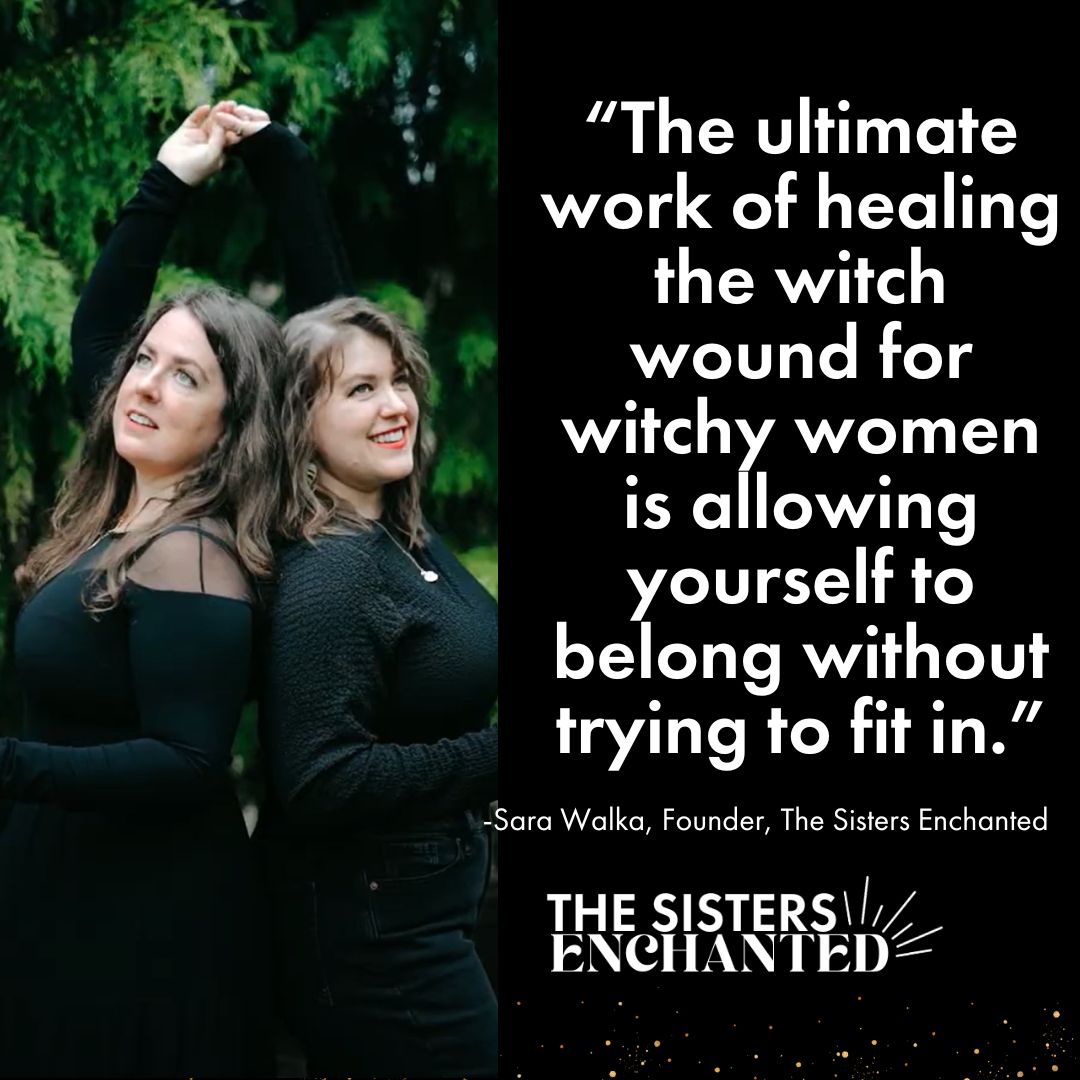
“The ultimate work of healing the witch wound for witchy women is allowing yourself to belong without trying to fit in.” – Sara Walka
Why Astrology Made Me Laugh at Myself
If you know astrology, this will make you laugh: my North Node is in the 11th house – the house of friendships and community. Your North Node represents what you’re working toward in this lifetime, the soul lesson that’s hardest for you.
Which means everything I’m teaching you right now? It’s literally the hardest thing for me to do.
I have spent years – years – working on allowing myself to belong without needing to fit in. It’s been uncomfortable, vulnerable, and absolutely necessary.
So when I say I get it, I really, really get it.
How to Start Healing the Witch Wound Through Belonging
Healing the witch wound is an inside job – yes, you need to rewrite the stories you tell yourself about your worth and your right to be seen. But it’s not a job done in isolation, because the wound itself wasn’t created in isolation.
Here’s what belonging-based healing looks like:
1. Find One Person Who Sees You Fully
You don’t need a whole coven (though that’s beautiful too). Start with one person who witnesses you without needing you to perform, shrink, or explain yourself.
2. Practice Visibility in Safe Containers
Join a spiritual community (online or in person) where you can practice being seen. Start small – share a tarot pull, ask a question, celebrate a win. Notice what comes up in your body when you do.
3. Stop Comparing Experiences
Your life doesn’t need to match someone else’s for you both to belong in the same space. Release the need for sameness and embrace witnessing each other’s different paths.
4. Celebrate Others Loudly
When you see someone’s magic, name it. When you witness their growth, celebrate it. When you notice their courage, honor it. This heals the collective witch wound.
5. Ask Yourself the Hard Questions
-
Where do I feel safe to be my most authentic, magical self?
-
What parts of me am I still hiding?
-
Am I trying to fit in, or am I allowing myself to belong?
-
What would change if I felt truly witnessed and celebrated?
What Being Witnessed Actually Means
Let me be clear: being witnessed is not the same as being validated.
Validation is witch wound territory – it means you need someone else to tell you you’re good enough, right enough, worthy enough.
Witnessing means someone sees your energy, your story, your purpose and says, “I see you. You’re here. You matter.”
You don’t need their approval. You need their presence.
And here’s the thing: if you’re not sharing your purpose, your soul, who you are – that’s the witch wound in action.
If you’re not being witnessed (not validated, not advised, just seen) – that’s the witch wound doing its work.
If you’re not being celebrated for something every single day – witch wound.
And if you’re not doing this for others? Also witch wound.
When we witness and celebrate each other, the witch wound starts to heal for all of us.
Your Next Steps: From Isolation to Sacred Belonging
The witch wound wants you small, quiet, and alone. It wants you to believe that taking up space is dangerous, that being seen is reckless, that your magic is too much.
But your soul knows different.
Your energy, your story, your purpose – all of it is meant to be shared, witnessed, and celebrated. Not hidden. Not dimmed. Not apologized for.
This week, I invite you to:
-
Identify one space where you can practice belonging instead of fitting in
-
Share one thing you’ve been hiding (in that safe space)
-
Witness and celebrate one other woman loudly
-
Notice how your body feels when you allow yourself to be fully seen
The witch wound was created in community, and that’s exactly where it must heal.
You’re not alone in this work. In fact, you were never meant to do it alone.
Ready to practice belonging in a space designed for spiritual women reclaiming their power? Join us in the Enchanted Journey membership, where we work with natural rhythms, practice sacred witnessing, and celebrate each other’s magic consistently. Learn more here.
Or dive deeper into witch wound healing with our free resources in the Stay Magic newsletter – where we explore shadow work, seasonal rituals, and the magic of becoming fully yourself. Sign up here.
Stay magic, Enchanted Sister. The world needs your full, unedited, beautifully too-much self.
Frequently Asked Questions About Witch Wound Healing
What is the witch wound and how do I know if I have it? The witch wound is an ancestral fear pattern rooted in the witch trials of the 1400s-1700s that manifests as a fear of being too visible, powerful, or authentic. Signs you’re carrying the witch wound include: feeling afraid to share your spiritual practice openly, apologizing for taking up space, self-excluding from communities before you can be rejected, people-pleasing to avoid conflict, hiding your wins or wisdom, and feeling lonely even in rooms full of people. If you’ve ever felt “too much” or feared judgment for your beliefs, you’re likely experiencing the witch wound.
Can the witch wound be healed through solo shadow work? While shadow work and personal reflection are important parts of witch wound healing, this wound cannot be fully healed in isolation – because it wasn’t created in isolation. The witch trials happened in communities where neighbors turned against neighbors, so healing requires community-based practices like allowing yourself to be witnessed, celebrating others, practicing belonging (not just fitting in), and building relationships where you can be your authentic self. Solo journaling supports the work, but transformation happens when you let yourself be fully seen.
What’s the difference between belonging and fitting in? Fitting in means editing yourself to match a group, hiding parts that feel different, and creating surface-level “friendly relationships” while avoiding real depth or conflict. Belonging means being fully seen and celebrated as you are, taking up space without apologizing, and building connections that honor difference rather than require sameness. When you’re trying to fit in, you’re deepening the witch wound through what Stanford researchers call “intentional invisibility.” When you allow yourself to belong, you’re healing it – for yourself and the collective.
How does witch wound healing help with spiritual awakening? Spiritual awakening often involves reclaiming your power, trusting your intuition, and expressing your authentic self – all things the witch wound tells you are dangerous. When midlife women begin exploring practices like tarot, moon rituals, or energy work, the witch wound can surface as fear of judgment, imposter syndrome, or the belief that they’re “too late” or “not intuitive enough.” Healing the witch wound through community belonging creates the safety needed for true transformation, allowing you to step fully into your magical identity without shame or hiding.
What if I don’t have a spiritual community to practice belonging in? Start with one person – a friend, family member, or online connection who sees and celebrates your authentic self. You can also join existing communities like online memberships for witchy women, local meetup groups focused on personal growth or metaphysics, or create your own sacred space through book clubs or moon ritual gatherings. The key is finding or creating containers where self-trust, everyday magic, and full self-expression are encouraged. Even practicing visibility in small ways – like sharing a tarot pull or celebrating someone else’s win – begins the healing process.